
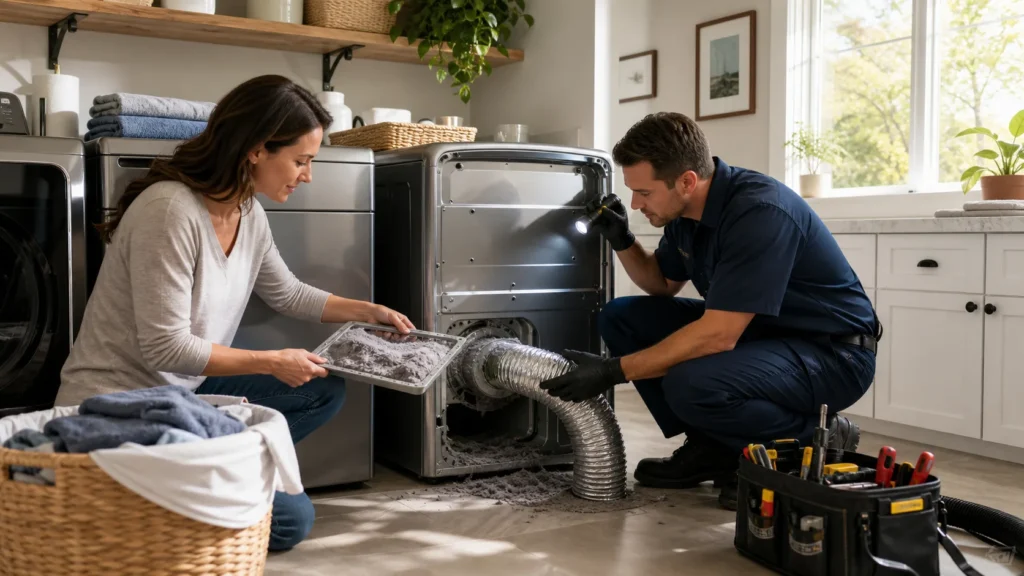
Everyday Dryer Habits That Quietly Increase Home Risk
Dryers feel simple. Toss in clothes, push a button, move on with your day. But those everyday habits in the laundry room can quietly undo the benefits of a professional dryer vent safety inspection in Mansfield and nearby Texas communities.
As we head into fall, many homes run more loads than usual. Back-to-school uniforms, fall sports gear, towels from weekend outings, and early holiday prep all keep the dryer busy. More use means more lint, more heat, and more wear on the vent line. When certain habits get mixed in, they can hide small problems that should be caught early.
We want to walk through some of the most common laundry habits that seem harmless but actually make it harder for a technician to see what is really going on inside your dryer vent system. A few small changes in how you dry clothes can make your next inspection more accurate and your home safer.
Overloading Every Cycle and Ignoring Heat Changes
Stuffing the dryer full feels like a time saver, but it can work against you. Big mixed loads of towels, bedding, or heavy jeans stop air from moving the way it should. The dryer has to work harder, the vent line handles more heat, and lint breaks off faster.
When loads are packed in tight, a few things can happen that an inspection might not show right away:
- Hotspots can form inside the vent line
- Lint can clump and press against weak spots
- Early damage can hide behind compacted lint
If a dryer vent safety inspection in Mansfield is done while the vent is full of packed lint, small issues like thinning metal or early warping might be harder to spot on the first pass.
Another quiet problem is ignoring heat changes. Many homeowners get used to little shifts and shrug them off. Warning signs include:
- Clothes that feel hotter than normal at the end of the cycle
- A laundry room that feels stuffy or warmer than the rest of the house
- Loads that need a second or third cycle to get fully dry
These are early signs that the vent may be restricted. When we see these issues, we want to track how long they have been happening. If they get brushed off, a minor vent blockage can grow into a real safety risk.
Safer habits are simple:
- Dry similar fabrics together so they move better
- Leave some space in the drum so air can circulate
- Pay attention to how many cycles each type of load usually needs
If you notice a sudden change in dry times or heat, that is a good moment to let a pro check things before the vent gets worse.
Skipping Lint Traps and Letting Dust Pile Up
Cleaning the lint screen is one of those tiny chores that is easy to skip when life is busy. But when the lint filter is clogged, the dryer pushes more lint deeper into the vent instead. That creates thicker layers that are harder to clear, and it can cover up trouble spots.
When lint gets forced into the vent line:
- It can hide small cracks or weak bends in the duct
- It can make it harder for a technician to see where air is catching
- It can pack around screws or joints where leaks may start later
Another quiet issue is the dust and lint around and behind the dryer. This area often gets ignored because it is hard to reach. Over time, that buildup can hide:
- Crushed or kinked vent hoses
- Loose or pulled-apart vent connections
- Torn foil or plastic sections that should be replaced with safer materials
Before a dryer vent safety inspection in Mansfield, a few simple habits can help the technician see more on the first look:
- Empty the lint filter before every single load
- Lightly vacuum or sweep around and under the dryer when you can
- Keep boxes, detergent bottles, and baskets away from the back of the dryer so the vent is easy to reach
These easy steps do not replace a professional cleaning, but they make it easier for us to spot issues that need attention.
Using the Wrong Settings and Products All Year Long
The high heat setting feels like the fastest, strongest option, so many people use it all the time. But different fabrics handle heat in different ways. Running every load on high can increase stress on the vent line.
Constant high heat can:
- Dry out and weaken vent materials
- Speed up lint shedding from fabrics
- Make it harder during an inspection to tell normal wear from heat damage
Another quiet factor is fabric softener. Dryer sheets and heavy liquid softeners can leave a thin, waxy film on the lint screen and inside the vent pipe. That coating:
- Blocks airflow through the lint screen
- Helps lint stick to the sides of the vent line
- Can hide early hotspots or partial clogs
Simple seasonal adjustments help a lot in our warm Texas climate:
- Use cooler settings for light summer fabrics and athletic clothes
- Use the proper bulky or towels cycles for thicker fall and holiday loads
- Hold your lint screen up to the light now and then, and if light does not pass through well, gently wash the screen with mild soap and water and let it dry fully
These changes help the vent run cooler and cleaner, which makes any inspection more accurate.
DIY Shortcuts That Confuse Professional Inspections
We know many homeowners like to fix things on their own. But some DIY patches around the dryer vent can actually create confusion and extra risk.
Common DIY shortcuts include:
- Taping over torn flexible vent hoses instead of replacing them
- Pushing the dryer tight against the wall to save space, which can crush the hose
- Rerouting the vent with extra sharp turns to make it reach a new spot
These changes can hide real problems or create new ones that are harder to see during a dryer vent safety inspection in Mansfield. Torn or taped spots can sit behind furniture. Extra bends can trap lint and create hidden blockages that do not show from the outside.
Another issue is using non-approved vent materials or screens. For example:
- Thin plastic or foil tubes instead of proper rigid or semi-rigid metal
- Homemade screens or coverings on exterior vent hoods that catch lint
These can make the homeowner feel like the vent is protected, but they often trap lint, slow airflow, and cover up where lint is trying to escape. When we inspect a system with these add-ons, it can take more time to trace the true vent path and find the real trouble points.
Letting a trained technician see and evaluate the full vent run, from the back of the dryer to the outside exit, is always safer than relying on quick at-home workarounds.
Turn Better Habits Into Mansfield Dryer Safety
Small daily choices in the laundry room add up over time. Load size, lint cleaning, heat settings, and avoiding DIY patches all play a part in how safely your dryer runs. They also affect how clearly a professional can see problems during an inspection.
Before a visit, homeowners in Mansfield, Burleson, Arlington, and nearby areas can follow a simple preinspection routine:
- Clear the space around the dryer so the back and sides are easy to reach
- Clean the lint screen and check it for softener residue
- Note any changes in how long loads take to dry or how hot the room feels
- Avoid running the dryer right before the appointment so surfaces can cool
These everyday habits help a dryer vent safety inspection in Mansfield reveal what is really happening inside your vent system, so potential issues are caught early and your home laundry stays safer season after season.
Protect Your Home With a Professional Dryer Vent Safety Check
If you have not had your dryer vent inspected lately, now is the time to schedule a thorough dryer vent safety inspection in Mansfield. At TexVents, we carefully check for hidden lint buildup, airflow issues, and potential fire hazards so your system runs safely and efficiently. Our team makes the process simple and convenient, working around your schedule and keeping you informed at every step. Ready to book your appointment or ask a question? Just contact us today.