
Protect Your Arlington Home Before Fireplace Season
A tired masonry fireplace can look fine on the surface while hiding problems that affect safety and comfort. Small cracks, loose bricks, or moisture damage often stay out of sight until smoke backs up, bricks start to crumble, or strange smells fill the room.
As evenings get cooler in Arlington, many homeowners start thinking about that first cozy fire. Early fall is a smart time to look closely at your fireplace and chimney. This is when hidden issues are easier to spot and fix before you are using the fireplace all the time. Older homes are not the only ones at risk. Newer houses can also have settling, moisture intrusion, or construction shortcuts that slowly weaken the masonry.
We are based in Burleson and see this often in Arlington homes. Problems that seem small at first can quietly affect safety and energy efficiency. A fireplace that does not draft well, leaks heat, or lets smoke escape into the room is more than just annoying. It can be a red flag that your system needs attention from a professional who works with masonry fireplace repair in Arlington on a regular basis.
Silent Warning Signs Inside Your Masonry Fireplace
The inside of your firebox can tell you a lot about your fireplace if you know what to look for. Many warning signs are easy to miss until they turn into larger issues.
Some of the most common clues include:
- Cracked, loose, or missing firebricks
- Crumbling or missing mortar joints
- Discoloration, stains, or white powder on the masonry
- A rusted or hard-to-move damper
Firebricks are made to handle high heat, but they are not indestructible. When you see:
- Hairline cracks that grow over time
- Bricks shifting or wobbling when lightly tapped
- Entire bricks missing or partly broken away
those gaps can allow intense heat to reach wood framing or other nearby materials. This can raise the risk of a fire in places you cannot see.
Mortar joints are just as important. When mortar starts to crumble out of the joints, it can lead to:
- Weak spots in the firebox walls
- Hot spots where heat breaks through faster
- Paths for smoke or gases to leak into the room
Discoloration and staining tell their own story. Dark, tar-like stains may mean heavy creosote buildup. White, chalky powder, also called efflorescence, often points to moisture getting into the masonry and then evaporating, leaving mineral deposits behind. That moisture can weaken bricks and mortar over time.
A damper that is rusted, stuck, or hard to operate is another quiet signal. Rust often shows that moisture is getting into the flue or firebox. When the damper no longer opens or closes properly, it can affect draft, cause smoke problems, and even let heated air escape from your home when you are not using the fireplace.
Hidden Structural Problems Behind the Brick Face
Not every issue shows up on the surface. Some of the most serious problems hide behind the brick face, inside the chimney structure, or up in the smoke chamber.
In Arlington, soil movement and foundation settling are common. Even small shifts in the structure can put stress on a masonry fireplace. Warning signs can include:
- Hairline cracks that run along mortar joints
- A firebox that looks slightly tilted or out-of-square
- Bricks that look pulled away from the wall or surround
The smoke chamber, where smoke and heat move from the firebox up into the flue, is another trouble spot. It is usually not visible without tools or a trained eye. Rough surfaces, open gaps, or voids in this area:
- Disrupt proper draft
- Can let smoke and byproducts leak into hidden spaces
- Make creosote buildup more likely
Inside the chimney, flue tiles and internal masonry can break down over time. Tiles may crack, mortar may fall out, or pieces of material may drop into the firebox. Homeowners often notice only a bit of debris and sweep it away, not realizing it may point to interior damage that needs attention.
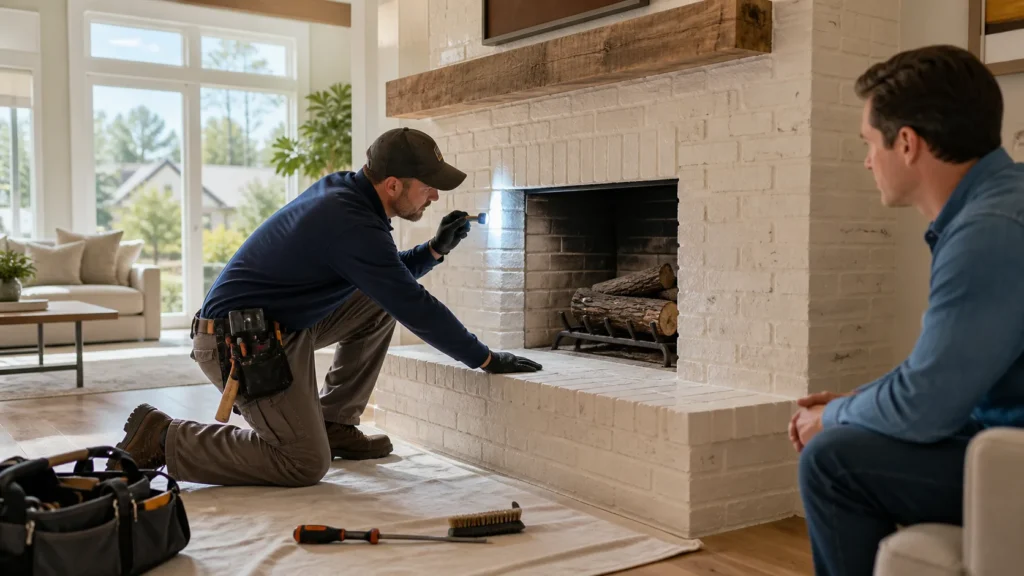
A detailed chimney inspection by a professional is often the only way to spot these problems early. With the right tools and lighting, we can see areas that are impossible to inspect from the living room floor and catch structural concerns before they grow into larger repairs.
Moisture Damage That Arlington Homeowners Overlook
North Texas weather can be tough on masonry. Storms, high humidity, and quick temperature swings all work against brick and mortar. Over time, water finds its way into small cracks and pores. When that water expands and contracts, it slowly breaks down the material.
One clear sign is spalling or flaking brick. This looks like:
- Brick faces chipping away
- Thin layers peeling off the surface
- Pits or holes where the face used to be
Spalling is more than a cosmetic issue. It often means water has been getting into the brick for a while, and the damage can reach deeper parts of the fireplace structure.
Inside the home, moisture problems around the firebox can show up as:
- Dark stains on the surround or nearby wall
- Musty or smoky odors even when the fireplace is not in use
- Mild mildew growth on nearby surfaces
These clues often point to water intrusion in or around the chimney or fireplace. Moisture weakens masonry, encourages mold, and can affect indoor air quality. Addressing the source quickly helps protect both the structure and the air your family breathes.
When It Is Time to Call a Masonry Fireplace Expert
Many Arlington homeowners are not sure when normal wear crosses the line into a real repair need. A practical checklist can help you decide when to bring in a professional who provides masonry fireplace repair in Arlington.
Pay attention if you notice:
- Smoke backing into the room when you start a fire
- Difficulty getting a strong draft going
- Visible cracks in the firebox or surrounding masonry
- Mortar that falls out when you touch it
- Pieces of tile, brick, or mortar dropping into the firebox
Seasonal timing matters too. Getting inspection and repair work done before the first strong cold front arrives helps you avoid long wait times and rushed fixes. Early fall is a good window, because you are likely not relying on the fireplace every day yet.
During a professional inspection, you can expect:
- A clear visual assessment of the firebox and surrounding area
- An interior evaluation of the smoke chamber and flue where possible
- Safety checks for drafting issues, moisture signs, and structural concerns
- Simple explanations of any repair recommendations and next steps
We focus on chimney sweeping, repair, dryer vent cleaning, and safety inspections. Our work does not include chimney flashing, which is usually handled by a roofing professional. Keeping those roles clear helps you know exactly who to call for each part of your system.
Secure a Safer, Cozier Fireplace Season
Hidden masonry issues do not fix themselves. When they are ignored, they often grow into bigger problems like poor draft, reduced efficiency, smoke in the living space, or damage to the structure of the chimney and surrounding walls. In the worst cases, heat or flames can reach parts of the home that were never meant to handle that kind of stress.
Thoughtful maintenance goes a long way. Regular sweeping, detailed inspections, and timely masonry fireplace repair in Arlington can extend the life of your fireplace and help it run more safely and efficiently. As a local chimney and dryer vent service based near Arlington, we see how much peace of mind a sound, well-maintained fireplace can bring to a home.
Get Started With Your Project Today
If your fireplace is showing cracks, loose bricks, or smoke issues, we are ready to help restore it safely and efficiently. Our team at TexVents specializes in detailed, long-lasting masonry fireplace repair in Arlington tailored to your home’s needs. Reach out through our contact page, and we will schedule a convenient time to inspect your system and provide a clear, written estimate. Let us help you get your fireplace back to reliable, worry-free performance.