
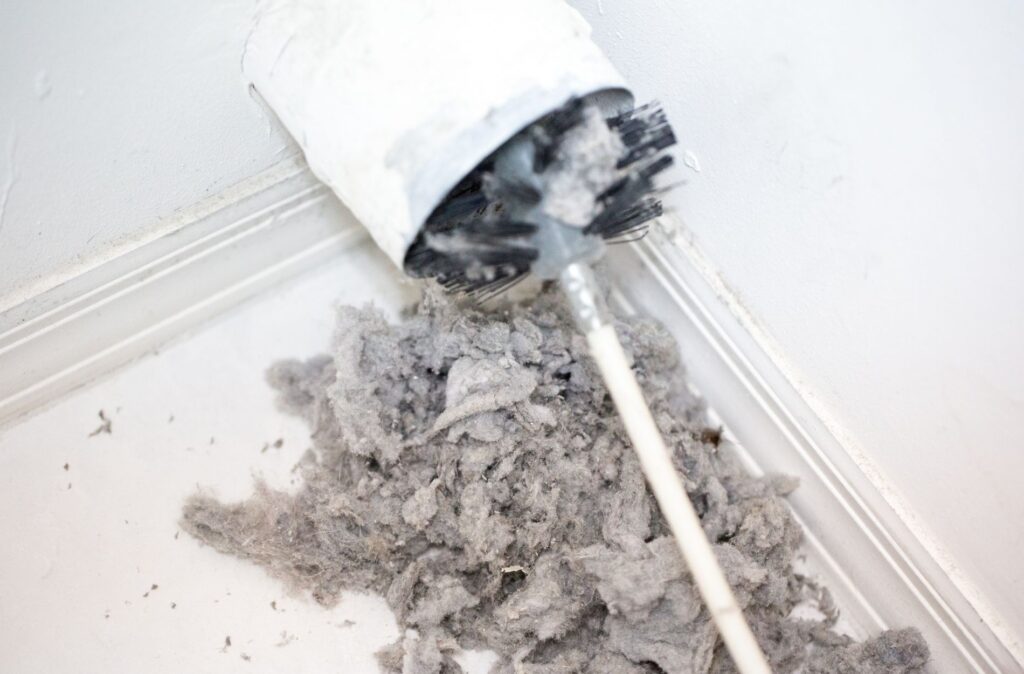
Hidden Lint Buildup That Threatens Arlington Homes
Dryer lint does not always sit where you can see it. In many Arlington homes, it hides deep in the walls and attic, blocking airflow and making the dryer work much harder. Many homeowners first notice it when a normal load suddenly needs two full cycles to get dry, even though they clean the lint screen every time.
Modern homes in Texas often have long, twisting dryer vent runs that you cannot see behind drywall or above the ceiling. Lint starts to stick inside those pipes, then grabs more lint with every load. Over time, that buildup can lead to higher energy use, overheated dryers, and a higher chance of a dryer fire, especially when the weather is already hot and dry.
As a local chimney and dryer vent company serving Arlington, Burleson, Mansfield, and nearby areas, we focus on finding those hidden lint paths and clearing them out safely. Keeping that vent clear protects your home, your family, and your dryer.
Why Dryer Lint Hides in Arlington Home Layouts
The way many area homes are built almost invites hidden lint problems. Laundry rooms are often placed:
- In the middle of the house with no outside wall
- Off an interior hallway near bedrooms
- On the second floor above the garage or living room
Since the dryer is not right on an outside wall, the vent has to travel farther to reach the outside. That vent line often snakes through an attic, between floors, or around framing. Every extra foot and extra bend is another place lint can stick and start to pile up.
Some of the biggest “hidden path” trouble spots we see include:
- Sags in flexible vent hose behind the dryer that create little pockets where lint sits
- Sharp turns in the vent line where air slows down and lint drops out
- Crimps or pinched spots where the vent passes through tight framing or behind cabinets
- Loose joints where sections of vent pipe were not supported well
North Texas homes also deal with attic heat, small building shifts over time, and normal vibration from the dryer. All of that can loosen connections or create dips that trap lint. So even if the outside vent hood looks clear from the ground, there can still be heavy buildup hiding in the middle of the line that you never see.
Warning Signs Your Dryer Vent Airflow Is Blocked
A hidden lint clog usually shows up through little changes around laundry day. Some warning signs of blocked airflow include:
- Clothes taking longer and longer to dry, especially towels, jeans, and bedding
- Needing two or more cycles for loads that used to dry in one
- The laundry room feeling warmer or more humid when the dryer is running
- The dryer cabinet or top panel feeling very hot to the touch
There are also more subtle clues that many Arlington homeowners overlook:
- A faint burning, hot, or musty smell while the dryer runs
- Visible lint building up around the dryer door seal or on the inside of the door glass
- The outside vent flap barely moving or not opening fully when the dryer is on
- Little or no warm air blowing out of the outside vent
As the weather warms up in North Texas, a clogged vent makes your dryer run even hotter and longer. That can raise energy use and put more stress on the heating element, drum, and internal parts. If you keep cleaning the lint screen and maybe the short hose behind the dryer but the dry times still stay slow, it is usually time to bring in a professional for dryer lint removal in Arlington, TX, instead of continuing to fight it on your own.
Hidden Dryer Lint Paths Pros Find That You Cannot
A professional dryer vent cleaning is very different from just wiping out the lint trap. Trained techs look at the entire system, from the back of the dryer all the way to the vent hood outside. We follow the vent path piece by piece, looking and feeling for bends, dips, and hidden junctions.
In local homes, we often find:
- Long vent runs buried under attic insulation where lint has coated the pipe wall
- Crushed or flattened sections of vent under stored boxes, boards, or old decorations in the attic
- Flexible vent behind stacked laundry units that has collapsed because it was not supported
- Joints that have separated slightly, letting lint collect and sometimes blow into the attic
A basic lint trap cleaning only removes a tiny part of the buildup. A full, system-wide lint removal clears the whole vent line, including the spots you cannot see or reach. Professionals also test airflow so you know the vent is actually moving air the way it should, not just “looking clean” at the dryer connection.
Because we work with vent systems every day, we also notice related safety issues. That might include poor vent routing, weak support, or materials that do not hold up well in hot attic spaces. The goal is to improve safety without tearing open walls or making a mess of your home.
How TexVents Handles Professional Lint Removal Safely
When we perform dryer lint removal in Arlington, TX and nearby communities, we follow a clear process built around safety and results. We usually start with a visual inspection at the dryer connection, then trace the vent path as far as we can through the attic, garage, or crawl areas. We also test airflow to get a “before” reading.
From there, we use tools made specifically for dryer vents, such as:
- Flexible rods that can turn through bends and corners
- Special brushes sized to the inside of the vent pipe
- Powered equipment to loosen and pull lint back toward a collection point
The goal is to push and pull lint out of long vent runs without tearing the vent or breaking joints. We work to contain the lint that comes out so it does not blow around your laundry room or attic. We also check the outside vent hood, make sure it opens freely, and confirm that there are no nests or debris blocking the exit.
After cleaning, we test airflow again. Homeowners usually notice the difference quickly. Dry times drop, the dryer runs cooler, and the laundry room feels less stuffy. That small change in everyday comfort comes with a big boost in safety, especially during high-use seasons when washers and dryers run back-to-back loads.
Take Back Safe Airflow in Your Arlington Laundry Room
A quick self-check can tell you a lot about the state of your dryer vent. On your next load, pay attention to:
- How long a normal load of towels or jeans takes to dry
- How warm the room feels while the dryer is running
- How hot the top or sides of the dryer feel
- How strongly air is blowing from the outside vent and how wide the flap opens
If you notice slow dry times, excess heat, strange smells, or weak airflow outside, it may be time for a professional inspection and cleaning before heavy laundry use and hot weather make things worse. Hidden lint in long vent runs or second-floor laundry setups will not fix itself and can slowly create bigger safety risks.
At TexVents, we focus on finding and clearing these hidden lint paths in Arlington, Burleson, Mansfield, and nearby areas. With a detailed inspection and a complete vent cleaning, we help bring back strong airflow, shorter dry times, and peace of mind every time you press start on the dryer.
Breathe Easier With a Safer, More Efficient Dryer Vent
If your dryer is taking longer to do its job or feels hotter than usual, it is time to schedule professional dryer lint removal in Arlington, TX. At TexVents, we clear hidden lint that can strain your dryer and increase fire risk, helping your system run safely and efficiently again. Reach out to us today through our contact page, and we will find a convenient time to inspect and clean your vent.