
Hidden Fire Risks Lurking in Your Dryer Vent System
Dryer vents seem simple, but the system that carries hot, moist air out of your home can hide some serious fire risks. When that vent is clogged, damaged, or routed the wrong way, heat and lint build up where you cannot see it, behind walls, in the attic and at the exterior hood.
Fall is a smart time for a dryer vent safety inspection in Mansfield. Many families are doing more laundry as kids are back in school, temperatures start to drop, and people spend more time at home. Holiday guests and extra loads can push a struggling dryer vent over the edge.
Across the country, many dryer fires start in places that are out of sight. Lint catches on rough or sagging duct, heat builds up, and by the time anyone notices, there is smoke. Even if a home inspector has looked at your house, the hidden parts of the vent system often do not get a close check.
Our focus at TexVents is on the full dryer vent path, not just a quick glance behind the dryer. We work in Mansfield, Burleson, Arlington, and nearby areas. We pay special attention to the sections most people miss: the parts buried in walls, ceilings, and attic spaces, along with the outside hood.
What Home and City Inspectors Commonly Overlook
General home inspections are usually limited in time and scope. When they look at a dryer vent, they often:
- Take a quick look behind the dryer
- Note the location of the exterior hood
- Check that air seems to be coming out
That kind of basic check can catch some obvious problems, but it leaves a lot uncovered. Many inspectors do not trace the whole vent route from the laundry room to the termination point. They may not measure how long the run is or count how many bends there are, both of which affect how well the dryer can push air out.
Other common oversights include:
- Not confirming what kind of duct material is inside the walls
- Ignoring hidden connection points above ceilings or inside chase spaces
- Skipping checks for crushed or low spots in long horizontal runs
A dedicated dryer vent safety inspection in Mansfield goes much deeper than a quick checklist. It calls for experience, the right tools, and a clear sense of how vents are usually routed in homes around here. That is how hidden risks are found before they turn into bigger issues.
Red Flags Hiding Behind Walls and Ceilings
Some of the most common problems are the ones you cannot see. In older homes or DIY setups, we still find unsafe duct materials inside finished spaces. These can include:
- Plastic flex duct
- Thin vinyl duct
- Foil accordion-style connectors run over long distances
These materials can trap lint and do not hold up well to heat over time. Inside a wall or ceiling, that trapped lint can sit right next to wood framing and insulation.
Routing problems are another big red flag. Behind the drywall, vents may have:
- Long, flat horizontal runs where lint settles
- Multiple tight bends that choke airflow
- Sagging sections that act like lint pockets
- Dead-end branches that go nowhere and collect debris
We also see hidden connection failures. Joints that were taped instead of clamped can come loose and start leaking hot, lint-filled air into wall cavities. Transition pieces can pull apart when the dryer is moved, then get covered by new flooring or trim so no one realizes it happened.
During a professional dryer vent safety inspection in Mansfield, we look for clues that point to these kinds of hidden issues. We use our experience with local home layouts, locate access points, and apply tools that help us understand what is going on inside the duct path, even when parts are out of sight.
Attic and Roof Space Hazards Few People Check
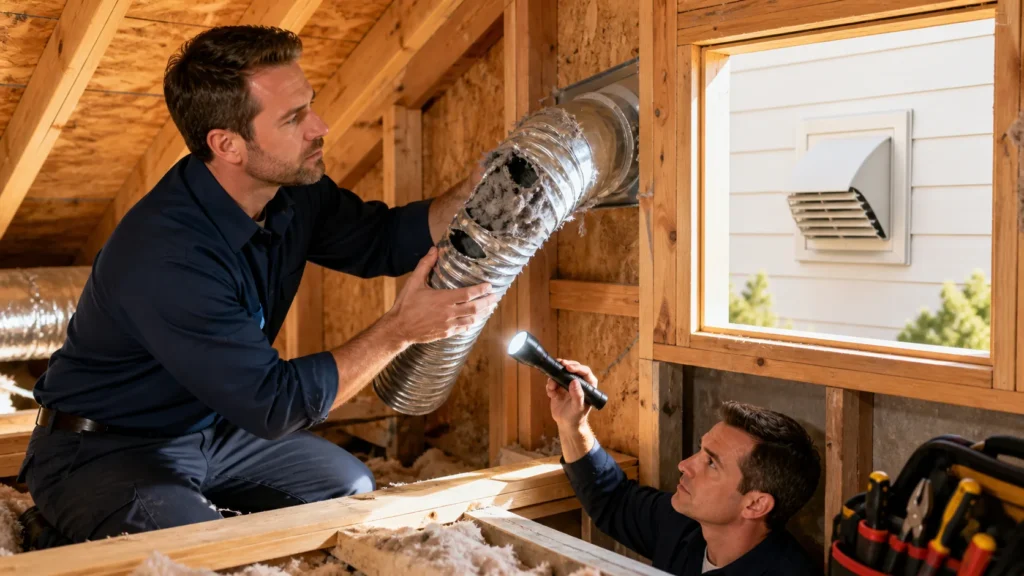
In many Mansfield-area homes, the dryer vent travels up into the attic before it exits through the roof or a gable wall. That long run through a hot, often cluttered attic can hide several problems.
Common attic red flags include:
- Ducts crushed or kinked under storage boxes or lumber
- Sections that have come apart, blowing lint into insulation
- Long metal runs with no insulation around them, leading to condensation
- Loose duct lying on the attic floor, with low spots that fill with lint
Sometimes the vent does not even make it to the outside. We have seen vents that end inside the attic instead of at an exterior hood, which can leave piles of lint and lots of moist air in the roof space.
Termination points at the roof can also be trouble. Roof jacks or caps can be clogged with lint, leaves, or even bird nests. When that happens, the dryer has to work much harder just to move air.
Homeowners sometimes notice warning signs without realizing they are related to the attic section of the vent, like:
- A laundry room that feels hotter and more humid than it used to
- Musty or dusty smells drifting down from the attic
- Lint collecting on shingles or nearby siding
- Clothes taking longer and longer to dry
These are all signals that the vent system needs to be checked from end to end, not just where you can easily see it.
Exterior Dryer Vent Hood Dangers You Can Spot
The exterior dryer vent hood is a key choke point. It is also the part most homeowners see, often when mowing the lawn or walking the dog. A quick glance is helpful, but it is not always enough to judge how well the vent is working.
Here are some red flags to look for at the exterior hood:
- Flapper doors that stay stuck open or never open at all
- Screens or cages that are packed with lint or pest debris
- Rusted, cracked, or broken covers that let water and critters in
- Hoods mounted very low to the ground where grass, dirt, and snow can block them
- Terminations buried behind thick bushes, lattice, or under decks
As fall arrives and the weather shifts, wind can blow leaves into and around the vent. Small animals may try to nest inside warm, sheltered openings. What starts as a small blockage can grow into a serious fire risk once the dryer is running more often.
During a full dryer vent safety inspection in Mansfield, the exterior hood gets careful attention. We look at how freely the damper moves, how strong the airflow feels, and whether a different hood style might help reduce lint buildup or pest problems in the future.
Schedule a Fall Safety Check Before the Holidays
Dryer vent safety is an important part of getting your home ready for cooler weather. Along with tasks like chimney sweeping and other fall maintenance, a thorough vent inspection and cleaning can help keep your home safer and more comfortable.
Some clear warning signs that it is time to have your system checked include:
- Clothes taking longer than one cycle to dry
- The dryer or laundry room feeling very hot during a load
- A burning, dusty, or musty odor when the dryer runs
- Visible lint blowing out or packed around the exterior hood
- The dryer shutting off mid-cycle or feeling hotter than usual to the touch
A professional inspection and cleaning can lower fire risk, help your dryer work more efficiently, and may extend the life of the appliance. At TexVents, we focus on dryer vents, chimney sweeping, and chimney repair for homeowners in Mansfield, Burleson, Arlington, and nearby communities. We take the time to look past the obvious and find the red flags that hide behind walls, in attics, and at the exterior hood, so your dryer can do its job with less risk and less stress.
Protect Your Home With a Professional Safety Inspection Today
If it has been a while since you checked your dryer vent, now is the time to schedule a thorough dryer vent safety inspection in Mansfield. At TexVents, we take the time to inspect, clean, and help prevent hazards so your system runs safely and efficiently. Reach out today to set up an appointment or ask questions about your specific setup by using our contact page.